

By Marcus Hau
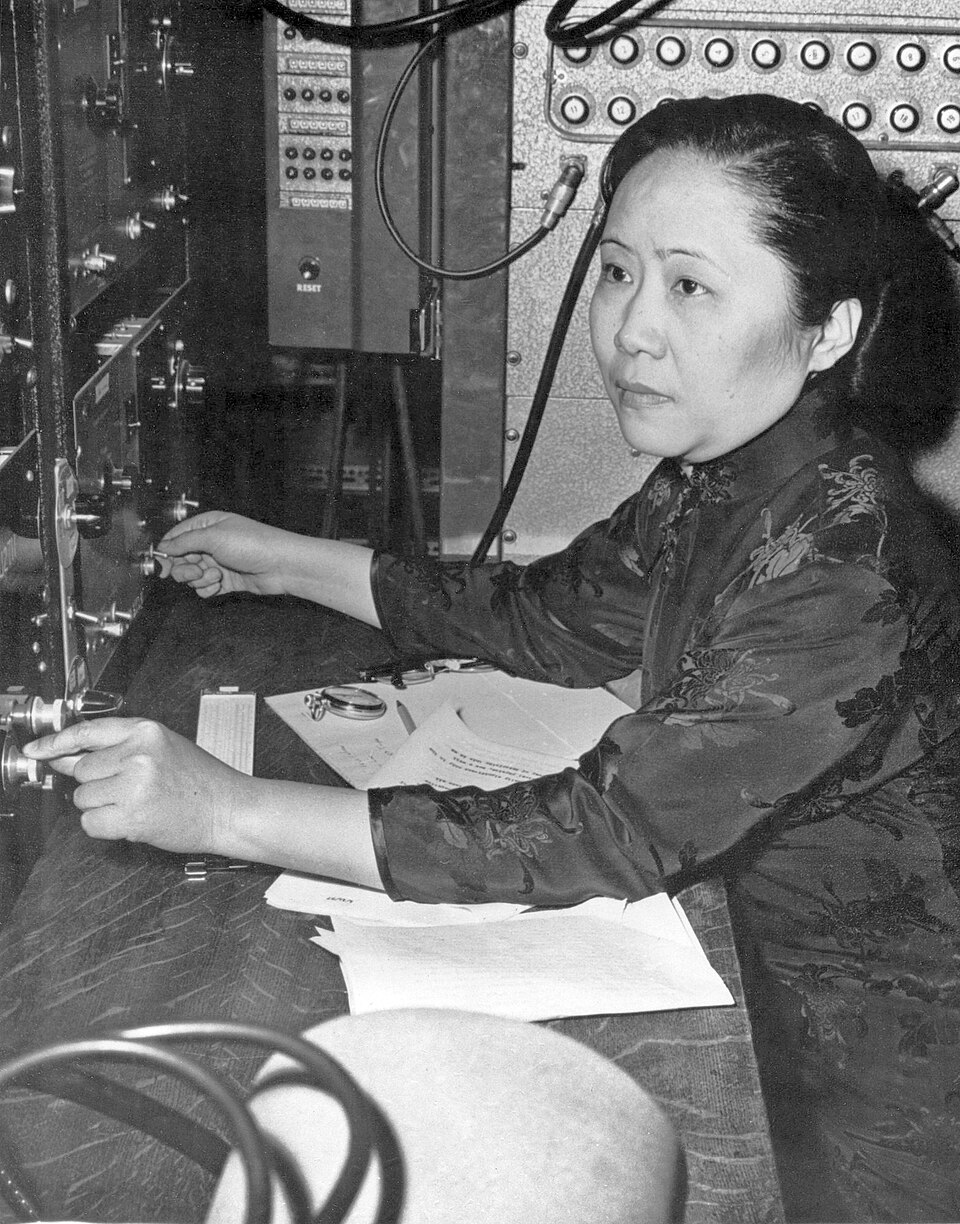
Chinese-American trailblazers have stretched the boundaries of what might seem possible, breaking conventions and clearing the way for later generations. One example is Dr. Chien-Shiung Wu, a Chinese-American physicist whose experiments transformed modern physics and earned her recognition as the “first lady of physics.”
Wu broke through cultural, racial, and gender barriers to win international acclaim for her extraordinary scientific breakthroughs. Her determination and intellect enabled her to create a legacy as a pioneer in nuclear physics and as a champion for women in science.
Pro-Education Parents
Wu was born in 1912 in Liuhe, a little town outside Shanghai, China. Her culture refused many women even an elementary education. But not her parents. Her father was a progressive engineer and her mother was a teacher. Her father set up a school for girls with himself as principal, and encouraged his daughter to pursue her studies.
Wu cultivated her love for science from a young age, which led her to study physics at China’s elite National Central University of Nanking.
These were exciting decades for the study of physics, with major discoveries by Fermi, Einstein and Curie.
Overseas Schooling
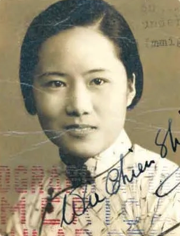
Source: National Archives
Still, it was rare for young women in China to pursue a higher education, especially in science and more so in physics. The same was true in America, if not more so. Yet Wu went to the United States in 1936 to pursue her Ph.D. in physics, and was so impressive an intellect that she ended up at the University of California, Berkeley, physics program studying under the guidance of famous physicist Ernest Lawrence.
Lawrence supervised Wu in her exploration of the physics of radioactive decay, focusing eventually on beta decay – a radioactive process in which an unstable atomic nucleus transforms, emitting a beta particle.
After graduation, even though she was a prodigy as an experimental physicist, Wu was not initially offered a faculty research appointment probably because she was female and an Asian immigrant, something that would haunt her for the remainder of her life.
Researching Nuclear Physics
Her PhD thesis focused on the radioactive beta decay of Xenon-133, and the production of radioactive isotopes of Xenon by the nuclear fission of uranium. Wu would become one of history’s key pioneers in beta decay research – a field that made possible the use of radiation to treat cancer.
It was while researching her PhD thesis at Berkeley that Wu first met J. Robert Oppenheimer, the future director of the Manhattan Project. This World War II project was the top secret U.S research and development program to create an atomic bomb before Nazi Germany.
The Big Bang
In 1944, Wu was hired for her knowledge about radioactive isotopes by the Manhattan project. She conducted research on radiation detection, improved the gaseous diffusion process, and successfully separated uranium isotopes, all of which contributed to the Manhattan Project’s success.
Like other involved physicists, Wu later distanced herself from the Manhattan Project after the bombings of Hiroshima and Nagasaki killed hundreds of thousands of people. She later recommended to the Taiwanese President Chiang Kai-shek to never build nuclear weapons.
Of her involvement, she said, “Do you think that people are so stupid and self-destructive? No. I have confidence in humankind. I believe we will one day live together peacefully.”
Professor, Finally
There were even greater accomplishments later for Wu as the first female tenured physics professor at Columbia University in 1952. (She wouldn’t be named a full professor until 1957, after a major finding.)
By this time, physicists had a firm understanding of the components of the atom – the building blocks of the universe. As they learned more, they were puzzled by new, “strange” subatomic particles that did not behave (that is move or spin) by the foundational rules of physics.
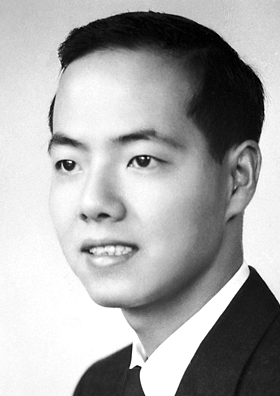
In 1956, Chinese-American theoretical physicists Tsung-Dao Lee and Chen-Ning Yang hypothesized that the Law of Parity Conservation, which was a mainstay of theoretical physics, would not hold true for weak interactions. Parity meant that natural forces (gravity, electromagnetism, strong nuclear force (holding atoms together) and weak forces (radiative decay) were symmetrical, and didn’t distinguish between left or right.
While experiments showed parity held true for electromagnetic and strong interactions, was it true for weak interactions in which radiative atoms decay?
Rewriting the Rules
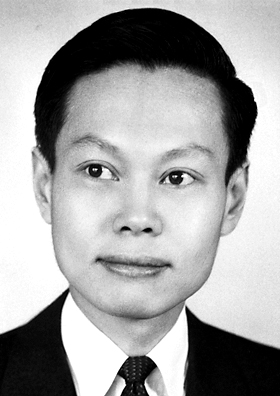
Lee and Yang turned to Wu to test and confirm their hypothesis. Wu, utilizing radioactive cobalt 60 and performing experiments in extremely low temperature conditions, demonstrated that parity is not conserved in beta decay – a discovery that stunned the world of science.
Wu’s experiment found that subatomic particles from radioactive cobalt atoms decayed by emitting electrons not randomly (!) but in certain preferred directions, opposite to the atom’s nuclear spin. This was a “mirrored” experiment, and yet left and right were swapped asymmetrically. The decaying cobalt atoms’ spin gave unexpected results, violating parity symmetry principles.
The discovery of parity violation shattered one of the most fundamental assumptions in physics. It forced a complete reformulation of the weak interaction theory and reshaped the framework for identifying subatomic particles. It was a major step in development of the Standard Model in the 1970s, which classified all known elementary particles and described the behavior of three of the four fundamental forces (electromagnetism, weak and strong forces).

No Nobel
After Lee and Yang published a paper with their theory, they were awarded the Nobel Prize for physics in 1957 – the highest annual award in science, literature, peace and economics. But Wu was excluded from this, despite playing a fundamental role in experimentally confirming their theory.
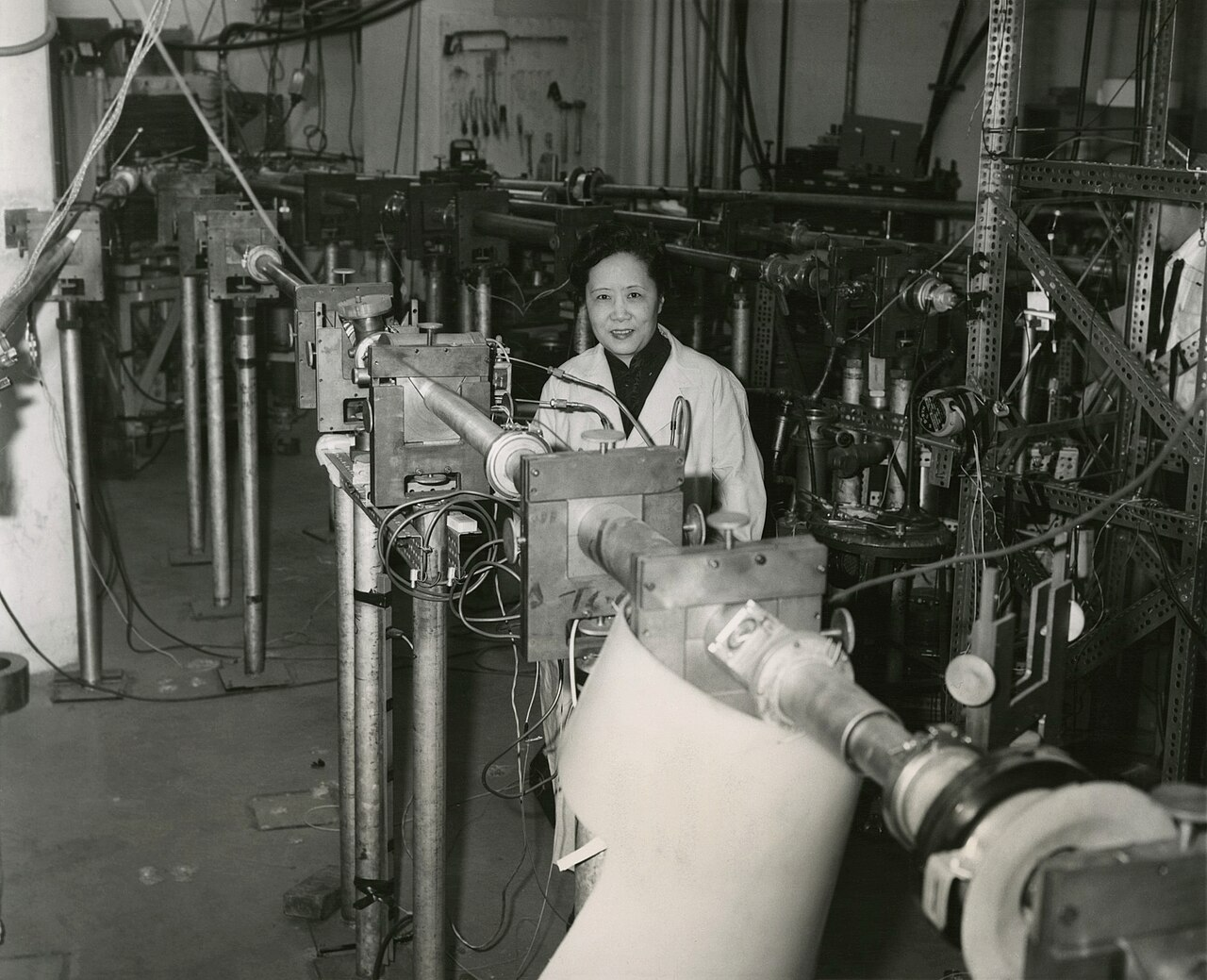
In the decades since Wu’s experiment, the understanding of beta decay has enabled several critical technologies: Carbon dating; medical imaging (like PET scans) and cancer treatments; and nuclear energy.
Belated Recognition
While Wu was passed over by the Nobel Committee, her contribution did not go unnoticed by the scientific community. She received various awards, including the first Wolf Prize in Physics, awarded in 1979, and was appointed the first female president of the American Physical Society.
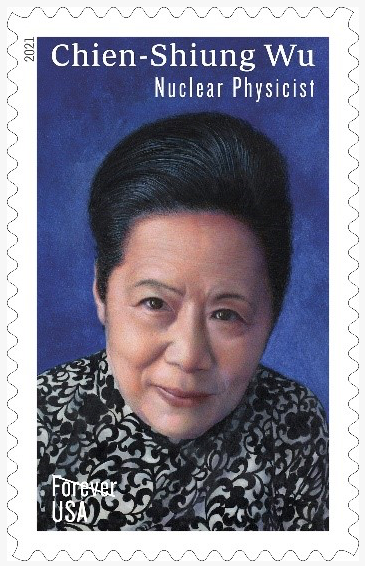
In 2021, 14 years after her death, the U.S. Postal Service issued a commemorative stamp honoring her as one of the most influential nuclear physicists of the 20th century, citing her enormous contributions to the physical sciences, and her research which altered modern physical theory forever.
Dr. Chien-Shiung Wu’s story is not just about scientific brilliance, but of resilience amidst adversity. She pioneered for women and immigrants in science, proving intellect has no bounds based on race or gender.
Her legacy continues to challenge subsequent generations of Asian Americans to advance their knowledge and achievements without trepidation, and to fight for fairness.
This article was submitted by Marcus Hau, the 2025 Roy & Gim Oi Lim Memorial Scholarship winner as the top high school senior. He was also presented a Johnny Wong Community Service Award. He is the great-grandson of Sui Ching Lau.
Coincidentally, a different, but similar article was submitted by Joshua Tam about how he was inspired by Dr. Chien-Shiung Wu. Portions of Joshua’s original article were added to Marcus’ story about Dr. Wu.


